By Eduardo Baptista
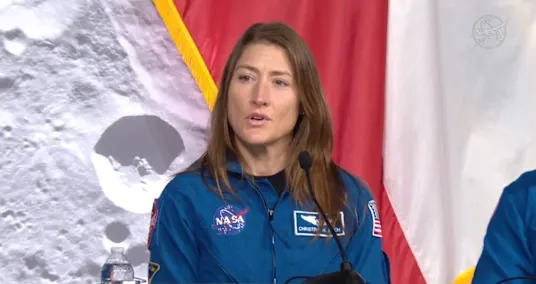
BEIJING, April 2 (Reuters) - NASA sent four astronauts on the world's first crewed lunar mission in half a century on Wednesday, in preparation for a first-ever manned landing on the moon's South Pole in 2028, as a space race between the United States and China intensifies.
China has only ever sent robots to the moon, but these missions have highlighted the country's rapidly improving space capabilities that will play a key role in fulfilling its goal of sending an astronaut to the moon by 2030.
While China has kept a tight lid on details, here is what we know about the country's crewed lunar exploration programme.
WHERE THE PROGRAMME STANDS
China is preparing all the different hardware it will need to pull off a crewed landing. Last August, it tested the lunar lander that it hopes will put the first Chinese on the moon by 2030.
The lander's ascent and descent systems underwent comprehensive verification at a site in Hebei province that was designed to simulate the moon's surface. The test surface had special coating to mimic lunar soil reflectivity, as well as being covered with rocks and craters.
The lunar lander, known as Lanyue, which means "embrace the moon" in Mandarin, will be used to transport astronauts between the lunar orbit and the moon's surface, as well as serving as a living space, power source, and data centre after they land on the moon, according to China's manned space agency.
Other key equipment and vessels that are under active testing and development include the Long March 10 heavy-lift rocket that will put the Mengzhou crewed spacecraft into orbit, as well as special lunar spacesuits and crewed rovers, along with lunar remote-sensing satellites and new ground systems to support the mission's navigation and communications with Earth.
WHAT HAPPENS AFTER 2030
A successful manned landing before 2030 would boost China's plans to build a "basic model" of the International Lunar Research Station by 2035, which would include a "comprehensive scientific facility" and "a certain scale of resource development and utilization", according to Wu Weiren, chief designer of China's lunar exploration programme.
This manned base, led by China and Russia, could include a nuclear reactor on the moon's surface as a power source.
Wu also said in a 2024 speech that, by 2045, the ILRS would have been extended to include a "lunar orbital station as the hub" that could be used to carry out "in-depth resource development and utilization, and relevant technical verification and scientific experimental research for manned landing on Mars".
LAYING THE GROUND WITH ROBOTS
China's crewed lunar mission will be relying heavily on data collected by the country's unmanned lunar missions. In June 2024, China became the first country to recover lunar samples from the moon's far side after sending the Chang'e-6 spacecraft to the South Pole-Aitken basin.
Two more missions, Chang'e-7 and Chang'e-8, will be carried out before 2030 and give Beijing a chance to gather further information on the part of the moon where China hopes to send an astronaut and eventually establish a permanent human presence.
China's uncrewed missions to the moon in recent years have allowed the country to become the only nation to retrieve lunar samples from both the near and far sides of the moon.
(Reporting by Eduardo Baptista; Editing by Alex Richardson)
LATEST POSTS
- 1
 Are Saturn's rings made of a lost, shattered moon? New evidence arises for the case
 - 2Ariana Grande to host 'Saturday Night Live' Christmas show with Cher as musical guest, returning after nearly 40 years
- 3Pick Your Number one breakfast food
- 4Ultra-Orthodox protests erupt across Israel on haredi IDF enlistment day
- 5Vote In favor of Your Number one Kind Of Food Conveyance Administration



- How the Iran war may affect your money and bills
- Is Trump going to war with Venezuela?
- Instructions to Pick the Ideal Pre-assembled Home for Your Necessities
- Which Exhibition hall Do You Suggest? Vote
- In these U.S. groups, deaths now exceed births. What’s happening?
- 'An incredible privilege and responsibility': Artemis 2's Christina Koch is ready to become the 1st woman to fly around the moon
- Watch India launch advanced military satellite on rocket's 1st flight since May 2025 failure
- Whale stranded off Germany for days found stuck again
- Research institutions tout the value of scholarship that crosses disciplines – but academia pushes interdisciplinary researchers out